The idea for creating this Ethno Village was born from Nedeljko Branković’s love for the traditional way of life, antiques, culture and heritage.
The aim is for the Ethno Village to organize exhibitions and art colonies, recreate historical events, and collect, preserve and present the tangible and intangible cultural heritage and traditional folk culture of this region and beyond.
The Concept
Open-Air Museum
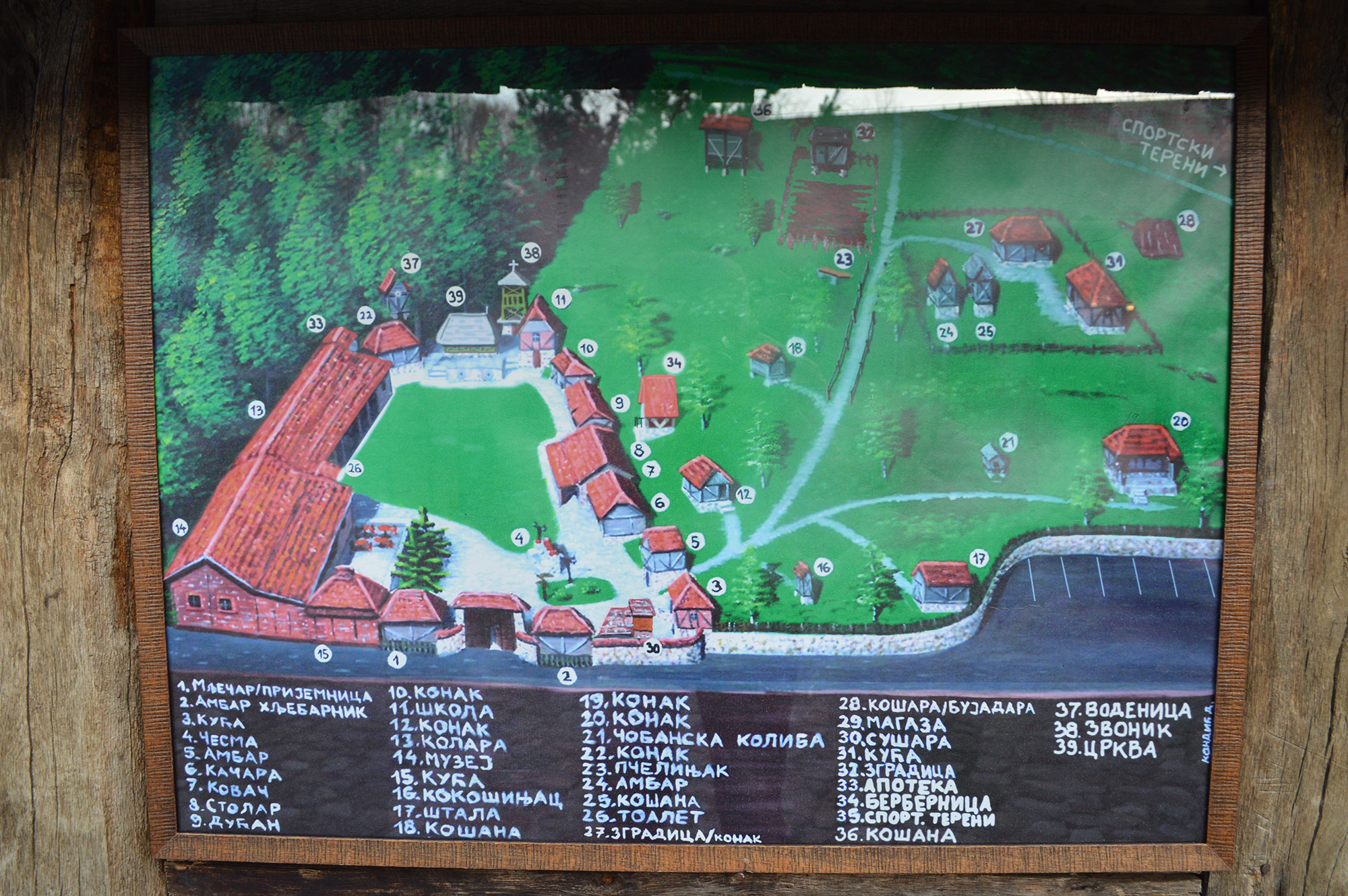
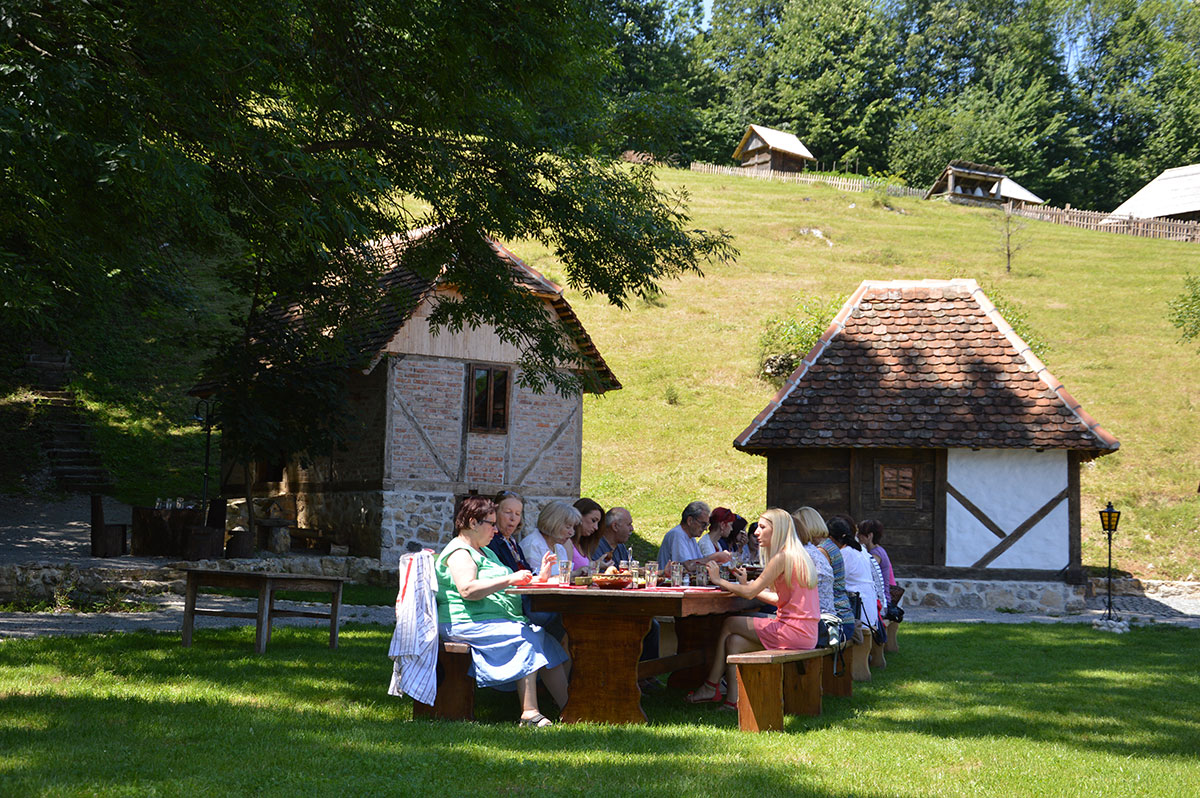
jubačke Doline Ethno Village was designed and established as an open-air museum, with the aim of showing the traditional life of a family cooperative from this region, including its traditional architecture, material culture and household furnishings from the late 19th and the first half of the 20th century.
The Ethno Village consists of 40 buildings, including 2 permanent exhibitions, 2 different households, around ten traditional craft workshops, an old school, a pharmacy, a tavern, a church and more.
Implementation
Buildings and Crafts
All the buildings mentioned above are authentic and were relocated from different locations, including the villages of Kola, Krmine, Javorani, Ljubačevo and others. They are furnished with authentic household items and everyday objects from that period.
In addition, as part of the Ethno Village, a blacksmith’s workshop, carpentry workshop, cooperage workshop, shop and other facilities have been relocated and reconstructed. All the workshops are equipped with authentic tools and machines from the 19th and the first half of the 20th century.
The central building of the Ethno Village is the museum, which houses our tavern, library, antique shop, weaving and tailoring workshops, as well as numerous permanent exhibitions dedicated to history, nature, archaeology, numismatics and more.
Unlike many other ethno villages of this kind, the vision of the owner, Nedeljko Branković, is for the Ethno Village, once all the work is completed, to be fully operational. This means that all the traditional crafts currently represented here will be active and fully functional.